Every property developer knows the dread of a failed final Air Permeability Test. The handover deadline is days away, but somewhere behind finished plasterboard, skirting boards, and kitchen units, air is escaping.
Finding and fixing structural drafts at the completion stage is a costly nightmare. It leads to delayed completions, unhappy clients, and blown budgets.
Fortunately, there is a proactive way to guarantee a final pass: First-Fix Air Testing.
What is First-Fix Air Testing?
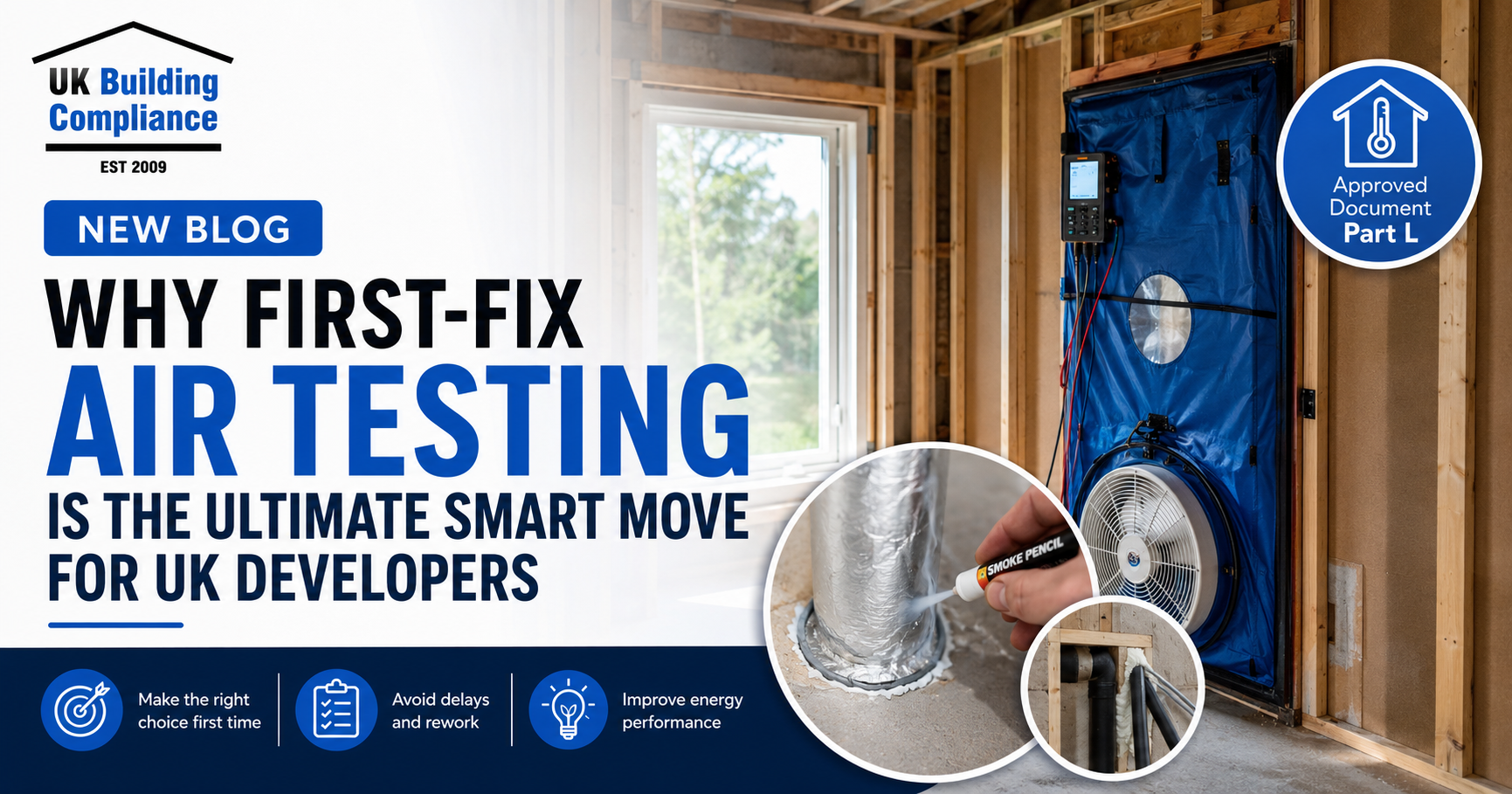
A first-fix air test—often called a pre-test—is an interim Air Tightness Test performed before the building fabric is sealed. It takes place once external windows and doors are installed, but before structural elements are hidden from view by the plasterboard.
While this intermediate test does not replace your mandatory building control certificate, it serves as a crucial dress rehearsal. It ensures your building envelope is airtight when modifications are still cheap and simple to make.
Major Advantages of Air Tightness Pre-Testing
1. Pinpoint Hidden Air Leaks Instantly
Once plasterboard is up, locating a draft is pure guesswork. During a first-fix air test, UK Building Compliance technicians use smoke pencils to track down escaping air.
We frequently catch hidden culprits early, including:
- Unsealed joist zones and floor voids
- Gaps around window and door structural openings
- Poorly sealed service penetrations (pipes, cables, and MVAC ducts)
- Dot-and-dab plasterboard pathways
2. Slash Your Remedial Costs
Sealing a gap around a soil pipe at the first-fix stage takes a quick squirt of acoustic sealant or a strip of specialist air-tightness tape.
Fixing that identical leak after completion means cutting into decorated plaster, re-plastering, re-painting, and paying for a re-test. Pre-testing ensures you build right the first time.
3. Ensure Compliance with Building Regulations Part L
With UK Building Regulations tightening up carbon emission targets, achieving low air permeability scores is tougher than ever.
An interim air test takes the gamble out of compliance. When you invest in a pre-test, your final, official air tightness test becomes a stress-free formality, keeping your project handover strictly on schedule.
Checklist: When to Book Your First-Fix Air Test
Timing is everything. To get the maximum value from your pre-test, ensure your site meets these criteria before our engineers arrive:
- External windows, doors, and roof lights are fully fitted.
- All service penetrations are punched through the external walls.
- The primary air barrier layer (membranes, structural boards, or blockwork) is complete.
- Crucial: Internal plasterboard is not yet installed.
Beat the Handover Stress with UK Building Compliance
At UK Building Compliance, we do more than just log numbers on a gauge. Our experienced, ATTMA-registered engineers act as your on-site partners. If your building leaks, we help you locate the source and advice your site team on the best sealing techniques right there and then.
Don't leave your final compliance to chance.
Book Your First-Fix Air Test Today or call our technical team to discuss your upcoming project.